
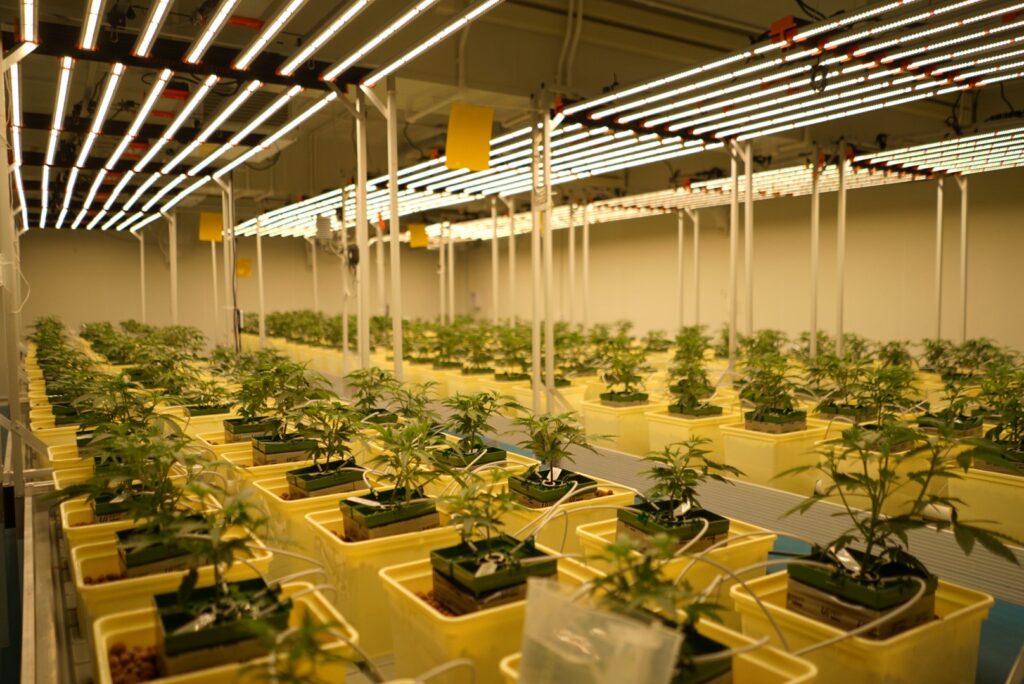
As Australia’s demand for pharmaceutical-grade medical cannabis continues to rise, Thailand is establishing itself as one of Asia’s most credible export-ready suppliers. This guide covers every critical step — from Thai FDA licensing and GMP compliance to TGA import pathways — for B2B buyers and importers looking to source verified medical cannabis directly from Thailand.
1. Thailand as a Medical Cannabis Export Hub
Thailand became the first Southeast Asian country to legalise medical cannabis in 2018, unlocking a regulatory framework that allows licensed producers to cultivate, manufacture, and export cannabis products for pharmaceutical use. Since then, the Thai government has progressively opened the sector to private enterprise — including foreign partnerships — positioning the country as a competitive supplier to regulated markets worldwide.
For Australian B2B importers, Thailand offers a compelling combination: a tropical growing climate, established regulatory oversight by the Thai Food and Drug Administration (Thai FDA), and a growing number of producers achieving international quality benchmarks such as GACP (Good Agricultural and Collection Practices) — backed by independently verified Certificates of Analysis (COA).
Key milestone: In 2021, Thailand’s government permitted private entities — including foreign companies — to participate in cannabis cultivation under contract with Thai hospitals or research institutions, broadening export opportunities for the B2B sector.
A Draft Cannabis Bill announced in 2024 is expected to further strengthen the export pipeline by mandating internationally recognised GACP growing standards and introducing track-and-trace requirements across the supply chain. This signals Thailand’s long-term commitment to becoming a trusted, high-quality supplier to markets like Australia.
2. Thai Regulatory Framework for Cannabis Export
The Thai FDA, operating under the Ministry of Public Health, governs all aspects of medical cannabis in Thailand — from seed to export. Any company intending to export medical cannabis from Thailand must satisfy the following requirements:
Required Licences and Certifications
- Cultivation licence — granted by the Thai FDA to approved growers operating under controlled conditions.
- Production/manufacturing licence — required for any processing or extraction of cannabis biomass.
- Export licence — issued by the Ministry of Public Health; products must have prior Thai FDA approval before an export licence is granted.
- Good Manufacturing Practice (GMP) certification — required by the Thai FDA for all processed or extracted cannabis products destined for export.
- GACP (Good Agricultural and Collection Practices) — mandatory at the farm level; documents cultivation conditions, input controls, traceability, and contaminant testing from seed through harvest.
Exporters must ensure that all products carry a valid Certificate of Analysis (COA) from an accredited laboratory, confirming cannabinoid profile, microbiological safety, pesticide residues, heavy metals, and moisture content.
| Document / Certification | Issuing Authority | Purpose |
|---|---|---|
| Cultivation Licence | Thai FDA | Legal authority to grow cannabis |
| Export Licence | Ministry of Public Health | Authorises international shipment |
| GMP Certificate | Thai FDA | Manufacturing quality assurance |
| GACP Certificate | Third-party auditor | Farm-level quality and traceability |
| Certificate of Analysis (COA) | Accredited laboratory | Product safety and cannabinoid profile |
| Phytosanitary Certificate | Thai Department of Agriculture | Required for botanical/raw material export |
3. Australia’s Import Framework: TGA Requirements
Australia’s medical cannabis sector is overseen by the Therapeutic Goods Administration (TGA), an agency of the Department of Health. The TGA classifies medical cannabis under two schedules:
- Schedule 4 — Prescription-only medicines (typically CBD-dominant products with low THC).
- Schedule 8 — Controlled drugs (products containing more than 2% THC), subject to strict storage, dispensing, and prescription controls.
Australian importers must determine the correct scheduling for each product before shipment, as misclassification will result in customs seizure.
Two Primary Import Pathways
1. Special Access Scheme (SAS): Permits the importation of unapproved therapeutic goods — including unregistered cannabis medicines — on a per-patient, case-by-case basis. This is the most commonly used pathway for imported Thai cannabis products.
2. Authorised Prescriber (AP) Scheme: Allows approved medical practitioners to prescribe an unapproved cannabis product to a defined class of patients without requiring individual TGA approval for each prescription. This is more efficient for ongoing, high-volume supply arrangements.
Role of the Office of Drug Control (ODC)
In addition to TGA approval, the Australian importer must obtain an import permit from the Office of Drug Control (ODC) under the Narcotic Drugs Act 1967. This permit must be in place before any shipment departs Thailand.
The imported product must also comply with the Therapeutic Goods (Standard for Medicinal Cannabis) Order 2017, which defines minimum quality standards for cannabinoid content, labelling, and testing documentation.
Labelling requirement: All products entering Australia must be accurately labelled with cannabinoid content (CBD, THC, and minor cannabinoids), batch number, manufacturer details, and storage instructions — in English, meeting TGA packaging guidelines.
4. Step-by-Step Export Process
- Qualify your Thai supplier — Verify cultivation and production licences, GMP certification, COA history, and export track record. Insist on a full documentation pack before signing a supply agreement.
- Define the product specification — Agree on cannabinoid ratios (THC:CBD), flower or extract format, packaging, and batch size. For Australian Schedule 8 compliance, THC content must be clearly declared.
- Apply for an ODC import permit — The Australian importer files with the Office of Drug Control. Processing times vary; plan for 4–8 weeks lead time.
- Secure TGA pathway approval — File under SAS (Category B for unapproved products) or confirm AP status with the prescribing physician network.
- Arrange international shipping — Cannabis exports are classified as narcotics. Use a freight forwarder with demonstrated experience in controlled-substance logistics and DEA/UN-compliant documentation.
- Clear Australian Border Force customs — Submit the ODC import permit, Thai export licence, COA, phytosanitary certificate, and commercial invoice. Quarantine inspection may be required for dried flower or biomass.
- Store and distribute under Schedule 8 controls — In Australia, Schedule 8 products must be held in TGA-approved secure storage facilities and dispensed only against valid prescriptions.
5. Key Considerations for B2B Importers
Quality Is Non-Negotiable
Australian customs and the TGA apply strict analytical standards. Products failing to meet declared cannabinoid potency, exceeding pesticide limits (per EU or TGA thresholds), or carrying microbiological contamination will be rejected and may trigger suspension of the import permit. Work only with Thai suppliers who provide full batch traceability from seed to export.
Prioritise GACP Compliance and COA Transparency
For Australian TGA review, the quality of your supplier’s documentation is as important as the product itself. Buyers should require a full Certificate of Analysis (COA) for every batch — issued by an ISO/IEC 17025-accredited independent laboratory — covering cannabinoid potency, residual solvents, pesticide residues, heavy metals, microbial limits, and moisture. Suppliers operating under GACP provide a traceable, auditable record from cultivation through harvest, giving importers the evidence base needed to satisfy TGA scrutiny with confidence.
The Regulatory Landscape Is Evolving Rapidly
Thailand’s forthcoming Cannabis Bill (2024 draft) is expected to introduce mandatory GACP standards, digital track-and-trace, and more granular export licensing. In Australia, the TGA continues to expand the Authorised Prescriber scheme, reducing per-patient approval friction. B2B importers should build regulatory monitoring into their supply chain management process.
Partnership with Healthcare Networks
Medical cannabis in Australia reaches end patients exclusively through licensed prescribers. B2B importers benefit significantly from established relationships with specialist clinics, GP networks, and pharmacy distribution chains experienced in Schedule 8 dispensing.
6. Selecting the Right Thai Cannabis Supplier
Not all Thai cannabis producers are export-ready. When evaluating suppliers, Australian B2B importers should prioritise the following criteria:
- Valid Thai FDA cultivation and export licences, current and in good standing
- GACP-certified cultivation practices with documented SOPs covering inputs, pest management, and harvest traceability
- Full batch COAs from ISO/IEC 17025-accredited independent laboratories for every lot
- GMP-compliant processing and packaging facilities (Thai FDA licensed)
- Demonstrated export history to regulated markets (EU, Australia, or equivalent)
- Transparent seed-to-sale traceability records available for buyer audit
- Willingness to undergo third-party supplier audits on request
Looking for a verified Thai cannabis supplier?
Elephant Cann is a licensed, GACP-compliant cannabis producer based in Thailand, supplying pharmaceutical-grade cannabis to B2B buyers across regulated international markets. Every batch ships with a full COA from an accredited independent laboratory — covering cannabinoid profile, pesticide residues, heavy metals, and microbiological safety. Our complete documentation pack is available on request.
→ Learn more about becoming an Elephant Cann export partner
7. Frequently Asked Questions
Is it legal to export medical cannabis from Thailand to Australia?
Yes — provided the Thai exporter holds valid Thai FDA cultivation and export licences, and the Australian importer holds an ODC import permit and TGA approval under either the SAS or AP Scheme. Both countries have established legal frameworks for this trade.
What quality documentation does the TGA require from a Thai cannabis supplier?
The TGA expects importers to demonstrate that products meet the Therapeutic Goods (Standard for Medicinal Cannabis) Order 2017. In practice, this means presenting a full Certificate of Analysis (COA) from an accredited laboratory for each batch, confirming cannabinoid potency, microbiological safety, pesticide residues, and heavy metals. Suppliers operating under GACP provide the cultivation-level traceability records that underpin credible COA documentation.
How long does the TGA import approval process take?
SAS Category B approvals are typically processed within 2–4 business days once the Australian prescriber submits a complete application. ODC import permits take considerably longer — allow 4–8 weeks. B2B importers should factor these lead times into supply planning.
Can dried cannabis flower be exported from Thailand to Australia?
Yes, but dried flower or botanical biomass is subject to Australian biosecurity inspection on arrival. Products must be commercially sterile, free from pests and foreign material, and accompanied by a Thai phytosanitary certificate.
What is the minimum order quantity for Thai cannabis exports?
Minimum order quantities vary by producer and product type. For B2B pharmaceutical supply, most Thai GMP-certified producers work in batch sizes from 1 kg upward for extracts and 5–50 kg for dried flower. Contact your supplier directly for commercial terms.
Conclusion
The pathway to export medical cannabis from Thailand to Australia is well-defined but demanding. Success requires a Thai supplier with verifiable GACP credentials, independently issued batch COAs, meticulous documentation across both the Thai FDA and Australian TGA/ODC systems, and an Australian import partner experienced in Schedule 8 controlled-substance logistics.
For B2B importers, the competitive advantage lies in selecting a Thai cannabis producer with proven export capability, transparent quality systems, and the regulatory documentation to satisfy TGA review without delay. Thailand’s evolving legislative environment, combined with its agricultural capacity and growing pool of internationally certified producers, makes it one of the most strategically important sourcing markets for Australian medical cannabis buyers over the next decade.
Source GACP-Certified Medical Cannabis from Thailand
Elephant Cann supplies pharmaceutical-grade cannabis with full COA documentation to B2B buyers in regulated markets worldwide. Every batch is independently tested and fully traceable from cultivation through export.Contact Our Export Team →
References & Further Reading
- Silk Legal — A Guide to Exporting Medical Cannabis from Thailand to Australia
- Thai Food and Drug Administration — Cannabis Regulatory Framework (Ministry of Public Health)
- Therapeutic Goods Administration (TGA) — Special Access Scheme & Authorised Prescriber Scheme
- Office of Drug Control (ODC) — Import Permit Requirements (Narcotic Drugs Act 1967)
- Therapeutic Goods (Standard for Medicinal Cannabis) Order 2017
This article is for informational purposes only and does not constitute legal advice. Regulatory requirements are subject to change. Consult a qualified legal adviser before initiating any cannabis export activity.