
The global cannabis industry has experienced a major shift from a legacy market to a highly sophisticated agricultural and biochemical sector. Central to this evolution is the concept of the cannabis strain — a term used colloquially to describe the distinct genetic variations of the Cannabis sativa L. plant.
For businesses, medical professionals, and consumers alike, understanding the structural, chemical, and experiential differences between various cannabis strains is essential. This comprehensive guide details the scientific classifications of cannabis, examines how environmental factors alter chemical profiles, and highlights the precision agricultural methods employed by advanced cultivation centers.
1. Taxonomic Classifications: Moving Beyond Sativa vs. Indica
Historically, the cannabis market categorized varieties using two primary lineages: Sativa and Indica. While these terms remain useful for high-level marketing, contemporary botanical science recognizes that traditional classifications do not fully capture a strain’s true chemical output.
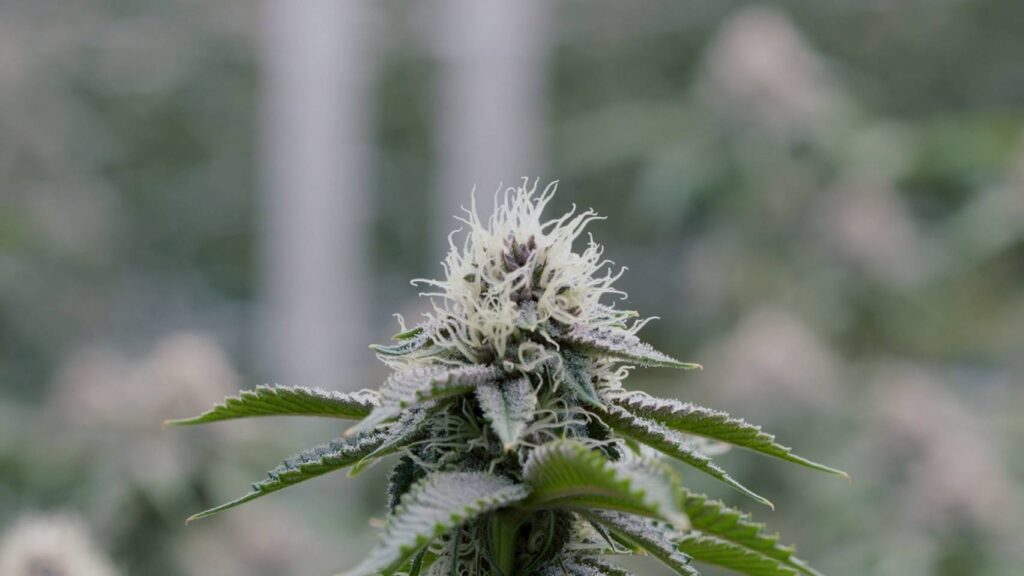
Modern classification prioritizes three primary chemotypes (chemical phenotypes):
- Type I (THC-Dominant): Strains displaying high concentrations of Tetrahydrocannabinol ($\Delta^9$-THC), responsible for the primary psychoactive effects.
- Type II (Balanced THC/CBD): Strains containing a relatively equal ratio of THC and Cannabidiol (CBD), offering therapeutic moderation.
- Type III (CBD-Dominant): Non-intoxicating strains utilized primarily for clinical and anti-inflammatory applications.
The physical morphology (growth structure) still dictates how these plants are cultivated on a commercial scale:
| Morphological Feature | Cannabis Sativa | Cannabis Indica | Hybrid Varieties |
| Plant Height | Tall, loose branches (up to 3–4 meters) | Short, compact bush (1–2 meters) | Variable; highly customizable |
| Leaf Structure | Narrow, slender leaflets | Wide, broad leaflets | Intermediate variation |
| Flowering Cycle | Prolonged (10–14 weeks) | Accelerated (7–9 weeks) | Optimized based on parent lineage |
| Climate Adaptation | Warm, humid equatorial regions | Cool, arid mountainous regions | Engineered for diverse environments |
2. The Entourage Effect: How Cannabinoids and Terpenes Work Together
A cannabis strain’s unique profile is not determined by its THC content alone. Instead, its effects are shaped by a complex biochemical interplay known as the Entourage Effect. This phenomenon occurs when minor cannabinoids and aromatic molecules work together synergistically to alter how the body’s endocannabinoid system responds.
Primary Cannabinoids
Beyond THC and CBD, modern lab testing tracks minor compounds that offer targeted therapeutic benefits:
- Cannabigerol (CBG): Often referred to as the “stem cell” cannabinoid; showing strong potential as a neuroprotectant and digestive anti-inflammatory.
- Cannabinol (CBN): A natural byproduct of THC oxidation, widely researched for its sedative properties.
The Role of Terpenes
Terpenes are organic, aromatic hydrocarbons produced in the plant’s glandular trichomes. They dictate the aroma, flavor, and physiological direction of each strain.
Key Industrial Terpenes:
- Myrcene: Musky, clove-like aroma. Promotes muscle relaxation and sedation; heavily present in relaxing Indica chemotypes.
- Limonene: Bright citrus profile. Clinically observed to modulate stress responses and elevate mood parameters.
- Caryophyllene: Spicy, peppery notes. Unique for its ability to bind directly to peripheral $CB_2$ receptors, acting as a potent anti-inflammatory agent.
3. The Science of Precision Cultivation
To preserve the complex chemical profiles of elite strains, growers must maintain strict control over environmental variables. Small shifts in lighting, nutrition, or humidity can change how a strain expresses its genes, altering both yield and chemical potency.
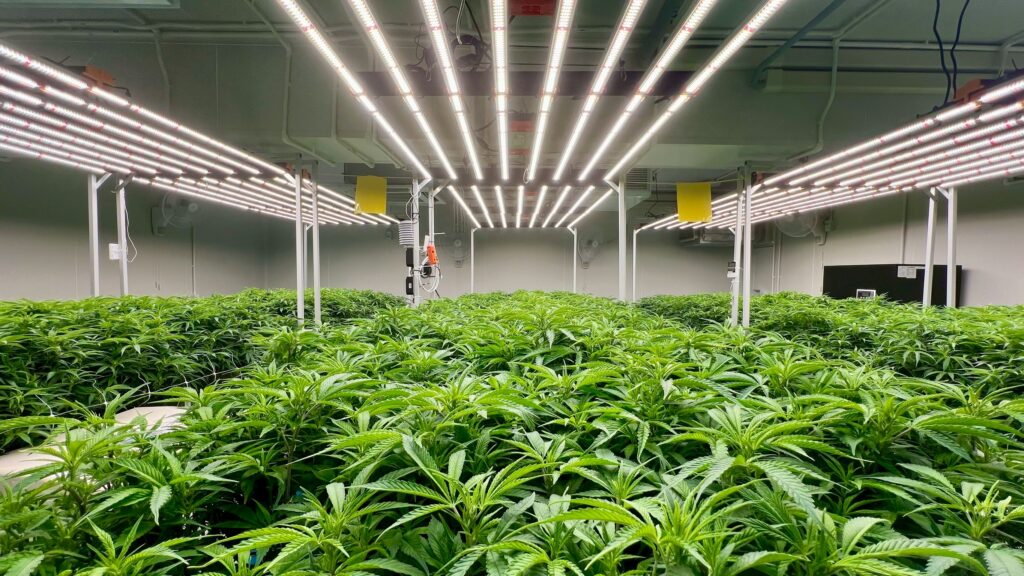
Industrial indoor facility optimizing environmental controls for strain consistency.
Achieving commercial-grade medical consistency requires top-tier agricultural technology. Facilities like the premium cannabis farm operated by Elephant Cannabis leverage automated climate management, precise nutrient delivery, and strict biosecurity protocols. This level of environmental control ensures that every harvest matches the exact cannabinoid and terpene specifications required by consumers and medical patients.
Commercial operations generally choose between two primary production environments:
- Indoor Controlled Environment Agriculture (CEA): Offers total isolation from outdoor elements. Cultivators precision-tune Photosynthetic Photon Flux Density (PPFD), carbon dioxide levels ($CO_2$), and Vapor Pressure Deficit (VPD) to maximize a strain’s genetic potential.
- Automated Greenhouses: Utilize natural sunlight alongside supplemental LED arrays and automated blackout curtains, balancing energy efficiency with year-round climate control.
4. Selecting the Right Strain: A Strategic Approach
With thousands of unique cultivars available, choosing a strain requires analyzing verified certificate of analysis (CoA) laboratory documents rather than relying on street names.
- Define the Therapeutic or Practical Objective: Determine whether the goal requires clear-headed focus (low-myrcene, high-limonene Type I or Type III strains) or deep physical relaxation (high-myrcene Type I strains).
- Evaluate Lab Profiles Over Percentages: High THC percentages do not automatically guarantee a superior experience. A balanced strain with a rich, $2\text{–}3\%$ terpene profile often delivers more noticeable, well-rounded effects than a single-molecule isolate lacking aromatic depth.
- Verify Sourcing Integrity: Ensure products are grown in clean facilities free of heavy metals, residual solvents, and chemical pesticides. Partnering with transparent, certified cultivation facilities is the most reliable way to guarantee product safety and consistency.